

Thermo Boil Out 210 Ltr
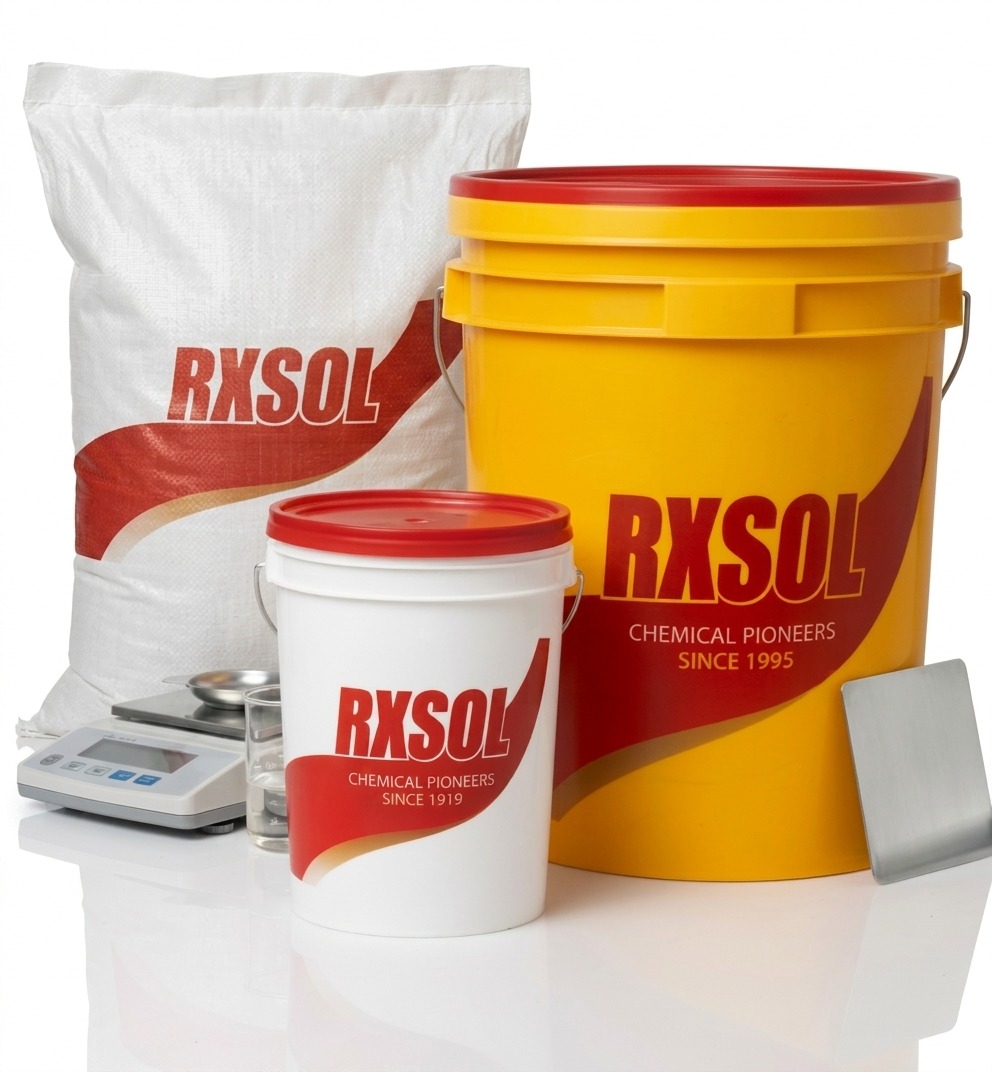
RXSOL-50-5024-210Alkaline boiler boil-out compound. Removes oil, grease and organic foulants and softens silica scale in one step. 210 Ltr drum.
Product Description
Thermo Boil Out is a ready-to-use alkaline formulation for the boil-out of boilers. It removes organic foulants such as oil and grease from the water side of the boiler and softens silica and other inorganic scale in a single step.
Application & Usage
- Boil-out of new boilers before commissioning, to remove mill oil, grease and preservation coatings.
- Boil-out of operating boilers to remove oil, grease and organic fouling from the water side.
- Softening of silica and inorganic scale before or after descaling.
- Shell boilers, water tube boilers and steam generators in power plants, process industry and ships.
Dosage
100 kg of Thermo Boil Out per 1000 litres of boiler water.
- Add the product through the manhole or with a pump.
- Fill the boiler above normal water level and replace the manhole cover.
- Fire the boiler to reach about 2 kg/cm2 pressure and boil out for 24 hours.
- After 24 hours, blow down to remove the solution.
- While filling with fresh water, open the manhole and flush with a water jet to remove loosened scale. Light brushing may be needed for heavy fouling.
Useful Area
Industrial Area
Technical Specifications
| Appearance | Clear to slightly hazy liquid, colourless to pale yellow |
| Nature | Strongly alkaline |
| pH (neat) | > 13 |
| Specific Gravity | 1.15 - 1.25 |
| Solubility | Completely miscible with water |
| Dosage | 100 kg per 1000 litres of boiler water |
| Packing | 210 Ltr drum |
Notes
- Single step cleaning: removes oil and grease and softens inorganic scale.
- Easy to use: no circulating pump or similar equipment needed.
- No neutralisation or passivation needed after descaling with this product.
- Strongly alkaline. Avoid contact with skin and eyes. In case of contact, wash with a large quantity of fresh water. Take the normal precautions for handling caustic solutions (gloves, goggles, apron).
- Store under normal conditions, in closed original drums.
Packing Sizes
Material Safety Data Sheet (MSDS)

| Product Name | THERMO BOIL OUT |
| Part Number | RXSOL-50-5024-210 |
| Product Type | Alkaline Boiler Boil-Out Compound (liquid) |
| Recommended Use | Industrial use only. Boil-out of new and operating boilers to remove oil, grease and organic foulants and to soften silica and inorganic scale. |
| Uses Advised Against | Any use other than the recommended use. Not for domestic or food contact use. |
| Packing | 210 Ltr drum |
Company Details:
RX MARINE INTERNATIONAL
105, A wing, BSEL Tech Park,
Vashi, Navi Mumbai 400703, INDIA
Stock Points: Mumbai, Kolkata, Chennai, Kandla, Visakhapatnam, Fujairah, Oman, Kenya
| Phone | +91 22 27815541 / 42 |
| Emergency (24 h) | +91 9821214367 |
| mail@rxmarine.com | |
| Website | www.rxmarine.com |

| Chemical Name | Concentration (% w/w) | CAS Number | EC Number | GHS Classification |
| Sodium hydroxide | 10 - 20 | 1310-73-2 | 215-185-5 | Skin Corr. 1A (H314), Met. Corr. 1 (H290) |
| Trisodium phosphate | 1 - 5 | 7601-54-9 | 231-509-8 | Skin Irrit. 2 (H315), Eye Irrit. 2 (H319) |
| Non-ionic wetting agent and silica penetrant | 1 - 3 | Proprietary | - | Eye Irrit. 2 (H319) |
| Water | Balance | 7732-18-5 | 231-791-2 | Not classified |
Full text of H-statements: see Section 16.


Corrosive
| GHS Classification | Skin Corrosion Category 1A; Serious Eye Damage Category 1; Corrosive to Metals Category 1 |
| Signal Word | DANGER |
| Hazard Statements | H290 May be corrosive to metals. H314 Causes severe skin burns and eye damage. |
| Precautionary Statements | P260 Do not breathe mist or spray. P280 Wear protective gloves, protective clothing, eye protection and face protection. P301+P330+P331 IF SWALLOWED: Rinse mouth. Do NOT induce vomiting. P303+P361+P353 IF ON SKIN: Take off immediately all contaminated clothing. Rinse skin with water. P305+P351+P338 IF IN EYES: Rinse cautiously with water for several minutes. Remove contact lenses, if present and easy to do. Continue rinsing. P310 Immediately call a POISON CENTER or doctor. P390 Absorb spillage to prevent material damage. P405 Store locked up. P501 Dispose of contents and container in accordance with local regulations. |
| Other Hazards | Strongly alkaline. Reacts with acids with release of heat. Reacts with aluminium, zinc and tin, releasing flammable hydrogen gas. |

| Eye Contact | Immediately flush eyes with plenty of fresh water for at least 15 minutes, holding the eyelids apart. Remove contact lenses if easy to do. Continue rinsing and get immediate medical attention. |
| Skin Contact | Remove contaminated clothing and shoes immediately. Wash the skin with a large quantity of fresh water for at least 15 minutes. Get medical attention. Wash clothing before reuse. |
| Inhalation | Move the person to fresh air. If breathing is difficult, give oxygen. Get medical attention if irritation of the nose or throat persists. |
| Ingestion | Do NOT induce vomiting. Rinse mouth with water and give small amounts of water or milk to drink if the person is conscious. Never give anything by mouth to an unconscious person. Get immediate medical attention. |
| Most Important Symptoms | Burning pain, redness and blistering of skin; severe eye damage; burns of mouth, throat and stomach if swallowed. |
| Note to Physician | Treat symptomatically. The product is a strong alkali; damage may be delayed. |

| Flammability | Not flammable, not combustible. |
| Extinguishing Media | Use media suitable for the surrounding fire (water spray, foam, dry powder, CO2). |
| Special Hazards | Contact with aluminium, zinc or tin may release flammable hydrogen gas. Heating of containers may cause pressure build-up. |
| Fire Fighter Protection | Wear self-contained breathing apparatus and full protective clothing. Cool containers exposed to fire with water spray. |

| Personal Precautions | Wear protective equipment as in Section 8. Keep unprotected persons away. Avoid contact with skin and eyes. |
| Environmental Precautions | Prevent entry into drains, sewers and water courses. Inform the authorities if large quantities enter drains or water. |
| Clean Up | Contain the spill with sand, earth or other inert absorbent material. Collect into suitable labelled containers for disposal. Small residues may be neutralised with dilute acid (for example citric acid) with care, then flushed with plenty of water. |

| Handling | Avoid contact with skin and eyes and avoid breathing mist. Use in well-ventilated areas. When diluting, always add the product to water slowly, never water to the product. Keep eye wash and safety shower available. Do not eat, drink or smoke while handling. |
| Storage | Store under normal conditions in the original closed drum, in a cool, dry, well-ventilated place away from direct sunlight. Keep away from acids and from aluminium, zinc and tin. |
| Suitable Containers | HDPE drums or mild steel / stainless steel tanks. Do not use aluminium, galvanised or tin containers. |

| Exposure Limits | Sodium hydroxide: 2 mg/m3 Ceiling (ACGIH TLV); 2 mg/m3 (OSHA PEL) |
| Engineering Controls | Good general ventilation. Local exhaust where mist may form. |
| Eye / Face Protection | Chemical safety goggles and full face shield where splashing is possible. |
| Hand Protection | Alkali-resistant gloves (nitrile, neoprene or PVC). |
| Body Protection | Chemical-resistant apron or coverall and safety boots. |
| Respiratory Protection | Not normally required. Use an approved respirator with particulate filter if mist is generated. |


Gloves Goggles Suit

| Appearance | Clear to slightly hazy liquid, colourless to pale yellow |
| Odour | Odourless to slight |
| pH (neat) | > 13 |
| pH (1% solution) | > 12 |
| Specific Gravity (at 25 °C) | 1.15 - 1.25 |
| Solubility in Water | Completely miscible |
| Boiling Point | > 100 °C |
| Freezing Point | Below 0 °C |
| Flash Point | Not applicable (aqueous, non-flammable) |
| Vapour Pressure | As water |

| Stability | Stable under normal conditions of storage and use. |
| Conditions to Avoid | Overheating, freezing, open containers (absorbs carbon dioxide from air). |
| Incompatible Materials | Acids (violent reaction with heat), aluminium, zinc, tin and their alloys, ammonium salts, organic halogen compounds. |
| Hazardous Decomposition | None under normal use. Hydrogen gas on contact with light metals. |

| Acute Toxicity | No data for the mixture. Sodium hydroxide: harmful by ingestion due to its corrosive action. |
| Skin Corrosion / Irritation | Causes severe burns. |
| Eye Damage | Causes serious eye damage; risk of permanent injury and blindness. |
| Inhalation | Mist irritates the nose, throat and respiratory tract. |
| Ingestion | Causes burns of mouth, throat and stomach. |
| Sensitisation / Carcinogenicity / Mutagenicity | Not classified. No components listed as carcinogens by IARC, NTP or OSHA. |

| Ecotoxicity | High pH can be harmful to aquatic life. The effect reduces quickly after dilution and neutralisation. |
| Persistence and Degradability | Inorganic components are not biodegradable but are neutralised in the environment. The wetting agent is readily biodegradable. |
| Bioaccumulation | Not expected. |
| Mobility | Fully soluble in water. |
| Note | Spent boil-out solution must be neutralised before discharge, as per local regulations. |

| Product | Neutralise with dilute acid under control and dispose of through an authorised waste handler, in accordance with local and national regulations. Do not discharge untreated into drains or the environment. |
| Contaminated Packaging | Rinse empty drums with water (add rinse water to the process or neutralise). Do not reuse for food or drinking water. |

| UN Number | UN 1719 |
| Proper Shipping Name | CAUSTIC ALKALI LIQUID, N.O.S. (Sodium hydroxide) |
| Hazard Class | 8 (Corrosive) |
| Packing Group | II |
| Sea (IMDG) | UN 1719, Class 8, PG II, EmS F-A, S-B. Not a marine pollutant. |
| Road (ADR) | UN 1719, Class 8, PG II, Classification code C5 |
| Air (IATA) | UN 1719, Class 8, PG II |

| GHS Labelling | Pictogram GHS05 (Corrosion); Signal word DANGER; H290, H314 |
| Other Regulations | Use and dispose of in accordance with local health, safety and environmental regulations. |

Full text of H-statements: H290 May be corrosive to metals. H314 Causes severe skin burns and eye damage. H315 Causes skin irritation. H319 Causes serious eye irritation.
Revision Date: 19-11-2026 Version: 1.0
DISCLAIMER OF LIABILITY: The information in this SDS was obtained from sources which we believe are reliable. However, the information is provided without any warranty, express or implied, regarding its correctness. The conditions or methods of handling, storage, use or disposal of the product are beyond our control and may be beyond our knowledge. For this and other reasons, we do not assume responsibility and expressly disclaim liability for loss, damage or expense arising out of or in any way connected with the handling, storage, use or disposal of the product. This MSDS was prepared and is to be used only for this product. If the product is used as a component in another product, this MSDS information may not be applicable.
Supply Locations
Need pricing or a bulk quote?
Send us the product and quantity — our team replies with a quote same day.