

Cooling Water Corrosion and Deposit Inhibitor
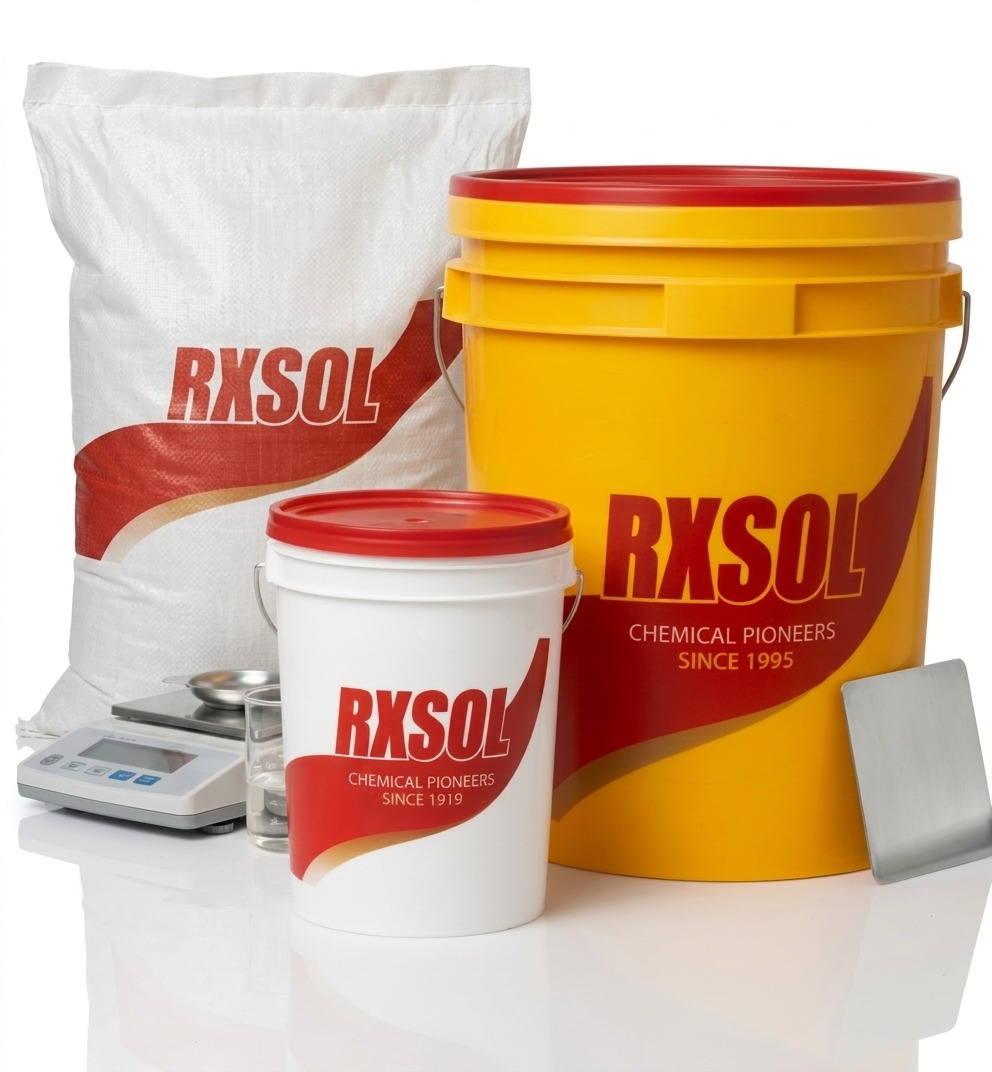
RXSOL-43-4065-025RXSOL Cooling Water Corrosion and Deposit Inhibitor is a specially formulated liquid water treatment chemical designed to provide combined corrosion inhibition, scale control and deposit management in industrial cooling water systems.
Product Description
It is designed for use in systems with recirculating water calcium concentrations between 50 and 1000 ppm (as CaCO3) at the targeted cycles when the pH is less than.This product is designed for Alkaline waters.
PRODUCT BULLETIN
RXSOL COOLING WATER CORROSION AND DEPOSIT INHIBITOR
Product Name: Cooling Water Corrosion and Deposit Inhibitor Brand: RXSOL Product Category: Industrial Water Treatment Chemicals Application: Cooling Towers, Industrial Cooling Water Systems, Heat Exchangers and Recirculating Water Circuits
Product Description
RXSOL Cooling Water Corrosion and Deposit Inhibitor is a specially formulated liquid water treatment chemical designed to provide combined corrosion inhibition, scale control and deposit management in industrial cooling water systems.
Cooling water systems are continuously exposed to dissolved minerals, oxygen, suspended solids and varying operating temperatures. These conditions can lead to corrosion, mineral scale formation and deposit accumulation on heat-transfer surfaces, pipelines and equipment.
RXSOL Cooling Water Corrosion and Deposit Inhibitor is designed to address these problems through a balanced treatment programme that helps protect compatible metallic surfaces while controlling the precipitation and accumulation of scale-forming minerals.
The product is suitable for use in open recirculating cooling towers and compatible industrial cooling water circuits, subject to water quality, system metallurgy and operating conditions.
Application & Usage
Major Applications
Cooling Towers: Used in open recirculating cooling water systems to control corrosion and mineral scale.
Heat Exchangers: Helps reduce mineral deposits on compatible heat-transfer surfaces.
Industrial Cooling Circuits: Supports corrosion and deposit control in process cooling systems.
Condensers: Helps minimize scaling and corrosion in compatible cooling water condensers.
Power Plants: Used as part of cooling water treatment programmes for suitable power generation cooling circuits.
Petrochemical and Refinery Cooling Systems: Supports corrosion and scale management in industrial cooling water networks.
HVAC Cooling Systems: Suitable for selected central air-conditioning cooling tower applications.
Manufacturing Facilities: Used in cooling water circuits serving chemical plants, steel processing, plastics, textile and other industrial operations.
Dosage
Recommended Dosage
The required dosage depends on circulating water quality, hardness, alkalinity, chloride concentration, operating pH, cycles of concentration and system metallurgy.
For preliminary treatment planning, an illustrative range for some formulated cooling water inhibitors is:
|
Application |
Illustrative Treatment Range |
|---|---|
|
Open Cooling Tower System |
30–100 ppm product in circulating water |
|
Moderate Hardness Cooling Water |
50–100 ppm product |
|
High Hardness Cooling Water |
Determined by water analysis |
|
Initial System Treatment |
Calculated from system volume and target residual |
|
Continuous Treatment |
Adjusted for blowdown and chemical losses |
Important: These are general industry screening ranges, not validated dosing instructions for this specific RXSOL product. A final dosage must be established from the actual formulation and site water analysis.
Useful Area
Frequently Asked Questions
Q1. What is RXSOL Cooling Water Corrosion and Deposit Inhibitor used for?
It is intended to control corrosion, mineral scale and deposits in compatible industrial cooling water systems.
Q2. Can the product be used in cooling towers?
Yes, it is intended for selected open recirculating cooling tower applications.
Q3. Does the product prevent calcium carbonate scale?
A suitable inhibitor formulation can reduce calcium carbonate precipitation and deposition within its validated operating range.
Q4. Can it protect carbon steel and copper alloys?
Carbon steel corrosion inhibition is a principal application. Copper alloys may require additional corrosion inhibitor chemistry, such as azoles.
Q5. Can it be used in closed chilled water systems?
Not automatically. Closed chilled water systems generally require a different treatment strategy and may require a dedicated closed-loop corrosion inhibitor.
Q6. How frequently should the product be dosed?
Continuous dosing is commonly used in open recirculating systems, with the feed rate adjusted according to blowdown losses and monitored inhibitor residual.
Q7. Does this product replace biocides?
No. Corrosion and scale inhibitors do not necessarily provide microbiological control. A separate biocide programme may be required.
Technical Specifications
Typical Physical & Chemical Properties
|
Property |
Typical Description |
|---|---|
|
Product Name |
Cooling Water Corrosion and Deposit Inhibitor |
|
Brand |
RXSOL |
|
Appearance |
Liquid |
|
Colour |
Formulation-dependent |
|
Chemical Nature |
Corrosion inhibitor and scale/deposit control formulation |
|
Solubility |
Water-compatible formulation |
|
pH |
To be confirmed from finished product specification |
|
Specific Gravity |
To be confirmed from finished product specification |
|
Corrosion Control |
For compatible cooling system metals |
|
Scale Control |
Calcium carbonate and other susceptible mineral deposits |
|
Application |
Open recirculating cooling water systems |
|
Dosing Method |
Continuous or controlled dosing |
|
Compatibility |
Depends on system metallurgy and water chemistry |
The above table describes the intended product characteristics. Exact analytical specifications must be confirmed from the approved RXSOL formulation and batch quality-control results.
Remarks / Precautions
Corrosion Inhibition Mechanism
Corrosion in cooling water systems is commonly caused by dissolved oxygen, aggressive ions, unfavorable pH and electrochemical reactions on metal surfaces.
RXSOL Cooling Water Corrosion and Deposit Inhibitor is designed to reduce corrosion by supporting the formation and maintenance of protective conditions at compatible metal surfaces.
Depending on the selected formulation, corrosion protection may involve phosphate, phosphonate, zinc, molybdate, polymeric or other inhibitor technologies.
An appropriately selected treatment programme can help reduce corrosion of:
-
Carbon steel pipelines
-
Mild steel equipment
-
Compatible heat exchanger components
-
Cooling tower circulation equipment
-
Other metals approved for the treatment chemistry
Copper and copper alloys may require a dedicated azole inhibitor. Aluminium and galvanized steel require additional compatibility assessment.
6. Scale and Deposit Control Mechanism
Cooling water contains dissolved calcium, magnesium, bicarbonate and other mineral ions.
As water evaporates in a cooling tower, dissolved mineral concentrations increase, creating conditions favorable for scale formation.
RXSOL Cooling Water Corrosion and Deposit Inhibitor is intended to control scale through mechanisms such as:
Threshold Inhibition: Helps delay mineral precipitation at concentrations below those required for stoichiometric sequestration.
Crystal Modification: Interferes with the formation and growth of certain scale crystals.
Dispersion: Helps maintain fine mineral particles in suspension, reducing their tendency to adhere to equipment surfaces.
Deposit Control: Supports cleaner heat-transfer surfaces when combined with suitable filtration, blowdown and water chemistry management.
Actual performance depends on the inhibitor formulation and the types of scale present.
Notes
Application Procedure
-
Water Analysis: Test makeup and circulating water for pH, conductivity, total hardness, calcium hardness, alkalinity, chloride, silica and other relevant parameters.
-
System Inspection: Evaluate existing corrosion, scaling, fouling and microbiological conditions.
-
Initial Dosing: Introduce the calculated amount of inhibitor into a suitable turbulent section of the circulating water system.
-
Continuous Dosing: Use a chemical metering pump to maintain the required treatment residual.
-
Water Chemistry Control: Maintain appropriate cycles of concentration through conductivity monitoring and blowdown.
-
Performance Monitoring: Monitor corrosion rates, deposit formation, inhibitor residual and heat exchanger performance.
-
Programme Adjustment: Adjust treatment based on operating data and changes in water quality.
9. Cooling Water Parameters to Monitor
|
Parameter |
Importance |
|---|---|
|
pH |
Influences corrosion and scale formation |
|
Conductivity |
Indicates dissolved salt concentration |
|
Calcium Hardness |
Indicates calcium scaling potential |
|
Total Alkalinity |
Influences carbonate scale formation |
|
Chloride |
Contributes to corrosion risk |
|
Silica |
Indicates potential silica deposit formation |
|
Inhibitor Residual |
Confirms treatment concentration |
|
Corrosion Rate |
Measures corrosion control effectiveness |
|
Microbiological Activity |
Indicates biological fouling risk |
|
Cycles of Concentration |
Supports water conservation and scale management |
The operating limits must be established for the specific cooling system.
10. Compatibility with Other Cooling Water Chemicals
RXSOL Cooling Water Corrosion and Deposit Inhibitor may be used as part of a comprehensive cooling water treatment programme incorporating:
-
Oxidizing or non-oxidizing biocides
-
Biodispersants
-
Scale control polymers
-
pH adjustment chemicals
-
Cooling tower cleaning products
-
Antifoaming agents
Compatibility should be confirmed before combining treatments.
Do not mix concentrated chemicals directly, particularly inhibitors and oxidizing biocides, unless compatibility has been verified.
Material Safety Data Sheet (MSDS)

| Product Name | Cooling Water Corrosion and Deposit Inhibitor |
| Part Number | RXSOL-43-4065-025 |
Company Details:
RX MARINE INTERNATIONAL
105, A wing , BSEL , TECH PARK.
VASHI ,NEW BOMBAY 400703 INDIA
Branch : Kandla, Mumbai , Chennai, Vizag, Kolkata, UAE , OMAN , CANADA and KENYA
| Phone | +91 22 20871200 - 1400 |
| Fax | +91 22 27612100 :::AOH :0091 9821214367 |
| mail@rxmarine.com | |
| Website | www.rxmraine.com |

| Chemical Name | CAS No | Weight |
| Phosphoric acid | 7664-38-2 | 40 - 60% |
| Proprietory Inhibitor | --- | Balance |

| Signal Word |
Danger. |
| Hazard Statements |
H226 Flammable liquid and vapor. H304 May be fatal if swallowed and enters airways. H315 Causes skin irritation. H319 Causes serious eye irritation. H332 Harmful if inhaled. H335 May cause respiratory irritation. H401 Toxic to aquatic life. |
| Precautionary statements response |
ClassificationCorrosive to metals : Category 1Skin corrosion : Category 1BSerious eye damage : Category 1GHS Label elementHazard pictograms :Signal Word : Danger Hazard Statements : May be corrosive to metals.Causes severe skin burns and eye damage.Precautionary Statements : |

| General advice | Consult a physician. Show this safety data sheet to the doctor in attendance. Move out of dangerous area. |
| If inhaled | If breathed in, move person into fresh air. If not breathing, give artificial respiration. Consult a physician. |
| Eye Contact | Rinse thoroughly with plenty of water for at least 15 minutes and consult a physician. |
| Swallowed | Do NOT induce vomiting. Never give anything by mouth to an unconscious person. Rinse mouth with water. Consult a physician |
| Skin Contact | Wash off with soap and plenty of water. Consult a physician. |
| Most important symptoms and effects, both acute and delayed | The most important known symptoms and effects are described in the labelling (see section 2) and/or in section 11 |
| Indication of any immediate medical attention and special treatment needed | No data available |

| Suitable extinguishing media | Use water spray, alcohol-resistant foam, dry chemical or carbon dioxide. |
| Unsuitable extinguishing media | No data available. |
| Special hazards arising from the substance or mixture | No data available. |
| Further information | Use water spray to cool unopened containers |
| Hazardous combustion products | No data available. |
| Advice for firefighters | Wear self-contained breathing apparatus for firefighting if necessary. |
| Specific Hazards Arising from the Chemical | No data available. |

| Personal precautions, protective equipment and emergency procedures | Use personal protective equipment. Avoid breathing vapors, mist or gas. Ensure adequate ventilation. Remove all sources of ignition. Evacuate personnel to safe areas. Beware of vapors accumulating to form explosive concentrations. Vapors can accumulate in low areas. |
| Spillage | No data availa |
| Personal Protection | No data available |
| Enviromental Precaution | Prevent further leakage or spillage if safe to do so. Do not let product enter drains. Discharge into the environment must be avoided. |
| Methods and materials for containment and cleaning | Contain spillage, and then collect with an electrically protected vacuum cleaner or by wet-brushing and place in container for disposal according to local regulations (see section 13). Keep in suitable, closed containers for disposal. |
| Reference to other sections | For disposal see section 13. |

| Advice on safe handling | Avoid contact with skin and eyes. Avoid inhalation of vapor or mist. Keep away from sources of ignition-No smoking. Take measure to prevent the buildup of electrostatic charge. |
| Advice on protection against fire and explosion | No data available |
| Incompatible materials | No data available |
| Hygiene measures | No data available |
| Conditions for safe storage, including any incompatibilities | Keep container tightly closed in a dry and well ventilated place. Containers which are opened must be carefully resealed and kept upright to prevent leakage. |
| Storage conditions | Recommended storage temperature 2 – 8oC |
| Storage class | Storage class (TRGS 510): Flammable liquids |
| Specific end use(s) | Laboratory chemicals, Manufacture of substances |

| Appropriate engineering controls | Handle in accordance with good industrial hygiene and safety practice. Wash hands before breaks and at the end of workday. |
| Exposure control | Personal Protective Equipment. |
| Eye/face protection | Face shield and safety glasses. Use equipment for eye protection tested and approved under appropriate government standards such as NIOSH (US) or EN 166(EU). |
| Body Protection | Complete suit protecting against chemicals. The type of protective equipment must be selected according to the concentration and amount of the dangerous substance at the specific workplace. |
| Skin protection | Handle with gloves. Gloves must be inspected prior to use. Use proper glove removal technique (without touching glove's outer surface) to avoid skin contact with this product. Dispose of contaminated gloves after use in accordance with applicable laws and good laboratory practices. Wash and dry hands. |
| Respiratory protection | Where risk assessment shows air purifying respirators are appropriate use a full face respirator with multi-purpose combination (US) or type ABEK (EN 14387) respirator cartridges as a backup to engineering controls. If the respirator is the sole means of protection, use a full face supplied air respirator. Use respirators and components tested and approved under appropriate government standards such as NIOSH (US) or CEN (EU). |
| Other Protection Measure | No data available |
| Control of environmental exposure | Prevent further leakage of spillage if safe to do so. Do not let product enter drains. |
| Thermal hazards | No data available |

| Physical state | Liquid |
| Colour | Clear colorless |
| Odour | Acidic |
| Odor Threshold | Not Applicable |
| pH | 0 - 1 |
| Melting Point | -17 °C |
| Boiling Point | 103°C |
| Flash Point | No Data Available |
| Evaporation Rate | Not Applicable |
| Flammability (solid, gas) | No data available |
| Explosive limits | No Data Available |
| Upper/lower flammability or explosive limits | No data available |
| Autoignition temperature | No Data Available |
| Decomposition temperature | No data available |
| Vapour pressure | No data available |
| Density | No Data Available |
| Vapour Density | No Data Available |
| Freezing point | No data available |
| Specific Gravity | No data available |
| Partition coefficient | No data available |
| Explosive properties | No data available |
| Solubility | Soluble |
| Relative density | 1.58 |
| Ignition temperature | No information available. |
| Particle characteristics | No data available |
| Viscosity | 21 mPa.s |

| Reactivity | No data available |
| Stability | Stable under recommended storage conditions. |
| Possibility of hazardous reactions | No data available |
| Conditions to avoid | Heat, flames and sparks. |
| Incompatible materials | Strong bases |
| Hazardous decomposition products | Hazardous decomposition products formed under fire conditions- Carbon oxides Other decomposition products- no data available |

| Acute toxicity | LD50 Oral- Rat- 3,275 mg/kg LC50 Inhalation –Rat- 4 h – 16.891 mg/l LD50 Dermal- Rabbit- >4,400 mg/kg |
| Skin corrosion/irritation | Skin- Rabbit Result: Skin irritation |
| Respiratory or skin sensitization | No data available |
| Serious eye damage/eye irritation | No data available |
| Germ cell mutagenicity | No data available |
| Specific target organ toxicity - single exposure | The substance or mixture is classified as specific target organ toxicant, single exposure, category 3 with respiratory tract irritation. |
| Specific Target Organ Toxicity – Repeated Exposure | No data available |
| Aspiration Hazard | May be fatal if swallowed and enters the airways. |

| Persistence and degradability | No data available |
| Bioaccumulative potential | Lepomis macrochirus (Bluegill sunfish) 30 d – 0.25 mg/l Bioconcentration factor (BCF): 96 |
| Toxicity to fish | Static test LC50- Pimephales promelas (Fathead minnow) – 5.2 mg/l – 96 h (OECD Test Guideline 203) |
| Toxicity to daphnia and other aquatic invertebrates | Immobilization EC50- Daphnia magna (Water flea) – 1.3 mg/l – 48 h (OECD Test Guideline 202) |
| Toxicity to algae | Growth inhibition EC50- Selenastrum capricornutum(green algae)–2.6mg/l -72 h (OECD Test Guideline 201) |
| Results of PBT and vPvB assessment | PBT/vPvB assessment not available as chemical safety assessment not required/not conducted. |
| Other adverse effects | An environmental hazard cannot be excluded in the event of unprofessional handling or disposal. Toxic to aquatic life |

| Product | Chemical waste generators must determine whether a discarded chemical is classified as a hazardous waste. Chemical waste generators must also consult local, regional and national hazardous waste regulations to ensure complete and accurate classification. |
| Contaminated packaging | Dispose of as unused product. |

| UN number | 2618 |
| UN proper shipping name |
Vinyltoluenes, stabilized |
| Transport hazard class(es) | 3 |
| Packaging group | III |
| Environmental hazards | No |
| Special precautions for user | No data available |
| Further information | No data available |

| Safety, health and environmental regulations specific for the product in question | This material safety data sheet complies with the requirements of Regulation (EC) No. 1907/2006. |
| Other regulations | No data available |
| Chemical Safety Assessment | For this product a chemical safety assessment was not carried out. |

| Other Information |
The information above is believed to be accurate and represents the best information currently available to us. However, we make no warranty of merchantability or any other warranty, express or implied, with respect to such information, and we assume no liability resulting from its use. Users should make their own investigations to determine the suitability of the information for their particular purposes. In no event shall be liable for any claims, losses, or damages of any third party or for lost profits or any special, indirect, incidental, consequential or exemplary damages, howsoever arising, even if Rx Marine International has been advised of the possibility of such damages. |
Supply Locations
RXSOL Cooling Water Treatment Chemicals – Supplier in India, UAE & Oman
RXSOL CHEMO PHARMA INTERNATIONAL
Product: Cooling Water Corrosion and Deposit Inhibitor Category: Cooling Water Treatment / Corrosion Inhibitor / Scale and Deposit Control
|
Region |
Website |
|---|---|
|
India |
|
|
UAE |
|
|
Oman |
RXSOL supports enquiries for cooling tower chemicals, industrial corrosion inhibitors, scale inhibitors and water treatment products for industrial and marine applications.
Technical Note: This bulletin is a general product description. The finished-product chemistry, specific gravity, pH, corrosion performance, treatment residual and dosage must be verified before issuing a final commercial TDS or making performance guarantees.
Need pricing or a bulk quote?
Send us the product and quantity — our team replies with a quote same day.