

Butyl Glycol
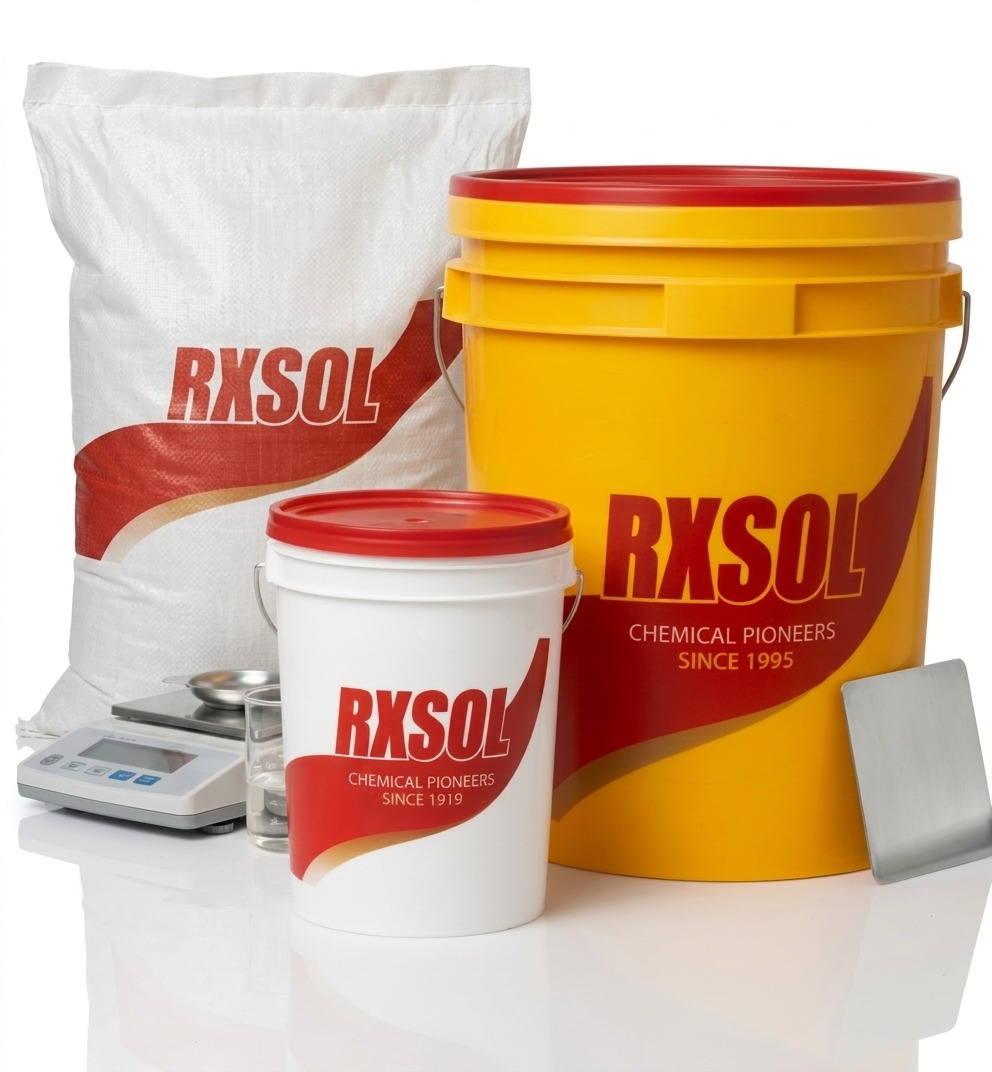
RXSOL-20-2099-025A fast-evaporating glycol ether with an excellent balance of hydrophilic and hydrophobic character; excellent active solvency and coupling properties.is a very versatile solvent product with a good balance of many different properties. With a nearly
Product Description
RXSOL BUTYL GLYCOL
Chemical Name: 2-Butoxyethanol (Ethylene Glycol Monobutyl Ether) CAS Number: 111-76-2 Molecular Formula: C₆H₁₄O₂ Molecular Weight: 118.17 g/mol Product Category: Industrial Solvents / Glycol Ethers / Cleaning Chemical Raw Materials
1. Product Description
RXSOL Butyl Glycol is a versatile, high-performance organic solvent belonging to the glycol ether family. Chemically known as 2-Butoxyethanol, it combines excellent solvent power with compatibility in many water-based and solvent-based formulations.
Butyl Glycol is widely used as a solvent, coupling agent, degreasing component and cleaning formulation ingredient in industrial, marine, automotive, textile, paint and coating applications.
Its molecular structure contains both hydrophilic (water-attracting) and lipophilic (oil-attracting) characteristics, allowing it to dissolve many oily contaminants while remaining miscible with water.
This makes Butyl Glycol particularly useful in industrial degreasers, heavy-duty cleaning products, paints, coatings, printing inks and specialty chemical formulations.
RXSOL-20-2099-210 A fast-evaporating glycol ether with an excellent balance of hydrophilic and hydrophobic character; excellent active solvency and coupling properties.is a very versatile solvent product with a good balance of many different properties. With a nearly equal balance of hydrophobic and hydrophilic character, RXSOL-20-2099-210 provides excellent performance in coatings, cleaners, and many other types of products. It is one of our fastest saling Product whis is frequently use for Dobule Bottom Tank Cleaning Purpose. RXSOL-20-2099-210 is compatible with a wide range of resin types, and it also offers 100% water solubility.
Application & Usage
Industrial Cleaning & Degreasing
Butyl Glycol is widely used in the formulation of heavy-duty cleaning chemicals for the removal of:
-
Industrial oils and lubricants
-
Grease and oily deposits
-
Workshop dirt and grime
-
Machinery contamination
-
Adhesive residues
-
Selected printing ink residues
-
General industrial soils
It is commonly incorporated into alkaline degreasers, multi-purpose cleaners and industrial maintenance formulations.
Marine Cleaning Chemicals
Butyl Glycol is used as a solvent ingredient in selected marine cleaning formulations.
Applications include:
-
Marine engine room degreasers
-
Machinery cleaning products
-
Heavy-duty maintenance cleaners
-
Oily surface cleaning formulations
-
Workshop and equipment cleaning
-
Selected tank-cleaning detergent formulations
The finished cleaning product must be assessed for surface compatibility, personnel safety and environmental discharge requirements.
Paints & Coatings Industry
Butyl Glycol functions as a solvent and coalescing aid in suitable paint and coating formulations.
It can assist with:
-
Film formation
-
Flow and levelling
-
Wetting of substrates
-
Solvent balance
-
Controlled evaporation
-
Application characteristics
It is used in selected water-based architectural and industrial coatings.
Printing Inks
Butyl Glycol is used in certain printing ink formulations to improve solvent balance, flow and application characteristics.
Textile Processing
Used in selected textile processing formulations as a solvent, wetting aid and auxiliary ingredient.
Automotive Chemicals
Butyl Glycol is incorporated into compatible automotive cleaning formulations, including workshop degreasers and selected surface cleaners.
Household & Institutional Cleaning
Used as an ingredient in formulated cleaners for hard surfaces, industrial floors and other suitable applications.
Dosage
Chemical Tank Cleaning
Spraying –
The tank should be sprayed with BSOLV, and then left for 45 minutes. After 45 minutes the tank should be butterworthed warm 50-60 o C for 30 minutes, followed by a 4 hour hot wash 80 – 85 o C, after which fresh water rinse and dry the tank. All safety precautions must be taken whenever handling this product.
Re-circulation –
Sufficient BSOLV should be filled into the tank so that the cargo pump and butterworth machines function properly. Circulations should be carried out for at least 4 and ideally 6 hours and all areas of the tanks must be rinsed. The tank MUST be at least cleaned to a good Water White standard and must be dry, before filling the Butyl Glycol. If another tank is to be circulated, then the product can be directly transferred. IF not, it can be returned to drums for further use at a later date. Following the circulations, the same washing procedure is carried out as outlined above in the spraying section.
* Use a strainer at the pumpstack when circulating any solution.Tank Lining – Stainless / Zinc / Epoxy
Industrial Area
Frequently Asked Questions
Q1. What is Butyl Glycol used for?
Butyl Glycol is used as an industrial solvent, coupling agent and cleaning formulation ingredient. Major applications include degreasers, paints, coatings, printing inks and specialty cleaners.
Q2. Is Butyl Glycol soluble in water?
Yes. 2-Butoxyethanol is completely miscible with water under normal conditions.
Q3. Can Butyl Glycol remove grease and oil?
Yes. It has useful solvent power for many oils and grease deposits, making it a common ingredient in industrial degreasers.
Q4. Is Butyl Glycol suitable for marine cleaning chemicals?
Yes. It can be used as a formulation ingredient in selected marine cleaning and degreasing products, subject to environmental and material compatibility requirements.
Q5. Is Butyl Glycol the same as Butyl Diglycol?
No. Butyl Glycol is 2-Butoxyethanol (CAS 111-76-2), whereas Butyl Diglycol is Diethylene Glycol Monobutyl Ether (CAS 112-34-5). They have different physical properties and evaporation characteristics.
Q6. Can Butyl Glycol be used directly on painted surfaces?
Not without testing. It may soften or damage certain coatings, plastics and finishes.
Q7. Is Butyl Glycol flammable?
It is a combustible liquid with a flash point typically around 60–67°C, depending on the test method. Appropriate fire prevention measures are necessary.
RXSOL BUTYL GLYCOL – Manufacturer & Supplier
RXSOL CHEMO PHARMA INTERNATIONAL
Product Name: Butyl Glycol Chemical Name: 2-Butoxyethanol CAS Number: 111-76-2 Product Category: Industrial Solvents / Glycol Ethers
Regional Supply Enquiries:
|
Region |
Website |
|---|---|
|
India |
|
|
UAE |
|
|
Oman |
Technical Disclaimer: This product bulletin provides general technical information for Butyl Glycol (2-Butoxyethanol). Actual purity, specifications, packaging and performance must be confirmed against the supplied grade's approved Technical Data Sheet, Safety Data Sheet and Certificate of Analysis.
Technical Specifications
Typical Physical & Chemical Properties
|
Property |
Typical Value |
|---|---|
|
Chemical Name |
2-Butoxyethanol |
|
Common Name |
Butyl Glycol |
|
Synonyms |
Ethylene Glycol Monobutyl Ether, EGBE, Butyl Cellosolve |
|
CAS Number |
111-76-2 |
|
Molecular Formula |
C₆H₁₄O₂ |
|
Molecular Weight |
118.17 g/mol |
|
Appearance |
Clear, colourless liquid |
|
Odour |
Mild, characteristic ether-like |
|
Purity |
Typically ≥99%, grade-dependent |
|
Specific Gravity at 20°C |
Approximately 0.90 |
|
Boiling Point |
Approximately 171°C |
|
Flash Point |
Approximately 60–67°C, depending on test method |
|
Freezing / Melting Point |
Approximately −75°C |
|
Solubility in Water |
Completely miscible |
|
Vapour Pressure at 20°C |
Approximately 0.8–1.0 hPa |
|
Refractive Index at 20°C |
Approximately 1.419 |
|
Chemical Family |
Glycol Ether |
|
Evaporation Rate |
Moderate to slow relative to common light solvents |
The above values are typical reference properties of 2-Butoxyethanol and are not batch-specific specifications. Final values must be confirmed from the applicable product TDS and COA.
Remarks / Precautions
Active solvent for solvent-based coatings.
Coalescent for industrial water-based coatings.
Coupling agent for architectural water-borne coatings.
Coupling agent and solvent in household and industrial cleaners, rust removers, hard surface cleaners, and disinfectants.
Primary solvent in solvent-based silk screen printing inks.
Coupling agent for resins and dyes in water-based printing inks.
Solvent for agricultural pesticides.
Very Effective and multi Tank Cleaning Active solvent for solvent-based coatings.
Coalescent for industrial water-based coatings.
Coupling agent for architectural water-borne coatings.
Coupling agent and solvent in household and industrial cleaners, rust removers, hard surface cleaners, and disinfectants.
Primary solvent in solvent-based silk screen printing inks.
Coupling agent for resins and dyes in water-based printing inks.
Solvent for agricultural pesticides.
Very Effective and multi Tank Cleaning
Butyl Glycol supplier in Mumbai, Kandla, Chennai, Kolkata, Visakhapatnam. We are supplying our customer as per there demand and purity of Butyl Glycol.
Notes
Key Features & Benefits
-
Excellent solvent power for oils, grease and many organic residues.
-
Completely miscible with water under normal conditions.
-
Effective coupling solvent for suitable cleaning formulations.
-
Helps improve the cleaning efficiency of surfactant-based detergents.
-
Suitable for aqueous and solvent-based chemical formulations.
-
Moderate evaporation rate for controlled cleaning and coating applications.
-
Useful as a coalescing and flow-enhancing solvent in selected coating systems.
-
Helps improve wetting and penetration of compatible oily deposits.
-
Can be incorporated into alkaline and neutral industrial cleaners.
-
Versatile raw material for industrial and institutional chemical manufacturing.
- Powerful solvency
- Coupling ability
- Coalescing ability
- Moderate evaporation rate
- High dilution ratio
- Wide range of applications
BUTYL CELLOSOLVE or 2-Butoxyethanol is an organic compound with the chemical formula BuOC2H4OH (Bu = CH3CH2CH2CH2). This colorless liquid has a sweet, ether-like odor, as it derives from the family of glycol ethers, and is a butyl ether of ethylene glycol. As a relatively nonvolatile, inexpensive solvent of low toxicity, it is used in many domestic and industrial products because of its properties as a surfactant.
Material Safety Data Sheet (MSDS)

| Porduct Name | Butyl Glycol |
| Part Number | RXSOL-20-2099-050 |
Company Details:
RX MARINE INTERNATIONAL
105, A wing , BSEL , TECH PARK.
VASHI ,NEW BOMBAY 400703 INDIA
Branch : Kandla, Mumbai , Chennai, Vizag, Kolkata, UAE , OMAN , CANADA and KENYA
| Phone | +91 22 27672100 - 1400 |
| Fax | +91 22 27612100 :::AOH :0091 9821214367 |
| mail@rxmarine.com | |
| Website | www.rxmraine.com |

| Chemical Name | Cas No | Whight |
| Propionitrile | 111-76-2 | > 99 % |

| Classification according to UN GHS 2009 | Classification of the substance and mixture: Flammable liquids: Cat.4 Serious eye damage/eye irritation: Cat.2A Acute toxicity: Cat.4 (oral) Skin corrosion/irritation: Cat.2 |
| Signal Word | Warning |
| Hazard Statements |
H227 Combustible liquid.
H319 Causes serious eye irritation.
H315 Causes skin irritation.
H302 Harmful if swallowed
|
| Precautionary statements |
P280 Wear protective gloves and eye protection or face protection.
P280 Wear eye protection.
P210 Keep away from heat, hot surfaces, sparks, open flames and other
ignition sources. No smoking.
P270 Do not eat, drink or smoke when using this product.
P264 Wash contaminated body parts thoroughly after handling.
Precautionary Statements (Response):
P305 + P351 + P338 IF IN EYES: Rinse cautiously with water for several minutes. Remove
contact lenses, if present and easy to do. Continue rinsing.
P301 + P312 IF SWALLOWED: Call a POISON CENTER or doctor/physician if you
feel unwell.
P302 + P352 IF ON SKIN: Wash with plenty of soap and water.
P330 Rinse mouth.
P332 + P313 If skin irritation occurs: Get medical attention.
P337 + P313 If eye irritation persists: Get medical attention.
P362 + P364 Take off contaminated clothing and wash it before reuse.
P370 + P378 In case of fire: Use alcohol-resistant foam, carbon dioxide, dry powder
or water spray for extinction.
Precautionary Statements (Storage):
P403 Store in a well-ventilated place.
Precautionary Statements (Disposal):
P501 Dispose of contents and container to hazardous or special waste
collection point
|
| Other hazards which do not result in classification: |
If applicable information is provided in this section on other hazards which do not result in
classification but which may contribute to the overall hazards of the substance or mixture.
See section 12 - Results of PBT and vPvB assessment.
|

| General advice |
.Remove contaminated clothing. If the patient is likely to become unconscious, place and transport in
stable sideways position (recovery position). If not breathing, give artificial respiration. First aid
personnel should pay attention to their own safety.
|
| If inhale | Keep patient calm, remove to fresh air, seek medical attention. |
| Eye Contact | Rinse thoroughly with plenty of water for at least 15 minutes and consult a physician. |
| Skin Contact | Wash thoroughly with soap and water |
| Ingestion | Immediately rinse mouth and then drink 200-300 ml of water, seek medical attention. |
| Most important symptoms and effects, both acute and delaye |
Symptoms: Information, i.e. additional information on symptoms and effects may be included in the
GHS labeling phrases available in Section 2 and in the Toxicological assessments available in
Section 11.
Hazards: Skin resorption hazard.
Information, i.e. additional information on symptoms and effects may be included in the GHS labeling
phrases available in Section 2 and in the Toxicological assessments available in Section 11.
(Further) symptoms and / or effects are not known so far
Treatment: Treat according to symptoms (decontamination, vital functions), no known specific
antidote
|

| Flammability | Flammable liquid Cool endangered containers with water-spray. See SDS section 7 - Handling and storage |
| Suitable extinguishing media | dry powder, water spray, carbon dioxide, alcohol-resistant foam |
| Unsuitable extinguishing media | water jet . |
| Special protective equipment: | Wear a self-contained breathing apparatus. Special protective equipment for firefighters |
| Further information |
Evacuate area of all unnecessary personnel. Fight fire from maximum distance.Extend fire extinguishing measures to the surroundings. Dispose of fire debris and contaminated
extinguishing water in accordance with official regulations.
|
| Additional information: | Use extinguishing measures to suit surroundings. |

| Personal precautions | Handle in accordance with good industrial hygiene and safety practice.Avoid all sources of ignition: heat, sparks, open flame.Use antistatic tools |
| Enviromental Precaution | Discharge into the environment must be avoided. |
| Methods for cleaning up or taking up: |
For large amounts: Pump off product.
For residues: Pick up with suitable absorbent material (e.g. sand, sawdust, general-purpose binder,
kieselguhr). Dispose of absorbed material in accordance with regulations.
|
| Additional information: |
High risk of slipping due to leakage/spillage of product.
Release of substance/product can cause fire or explosion. Shut off or stop source of leak. Shut off or
stop released substance/product under safe conditions.
Pack in tightly closed containers for disposal.
|

| Handling |
Ensure thorough ventilation of stores and work areas. Prevent contact with air/oxygen (formation of
peroxide).
Protection against fire and explosion:
Prevent electrostatic charge - sources of ignition should be kept well clear - fire extinguishers should
be kept handy.
|
| Storage | Further information on storage conditions: Keep container tightly closed in a cool, well-ventilated place |
| Storage stability | Storage temperature: = 35 °C The stability data given is only valid when stored under oxygen free inert gases or in containers that are impermeable to oxygen. |

| Components with occupational exposure limits |
2-butoxyethanol, 111-76-2;
TWA value 20 ppm (ACGIHTLV)
TWA value 50 ppm (OEL (TH))
|
| Eye protection | Safety glasses with side-shields (frame goggles) (e.g. EN 166) |
| Body Protection |
Body protection must be chosen depending on activity and possible exposure, e.g. apron, protecting
boots, chemical-protection suit (according to EN 14605 in case of splashes or EN ISO 13982 in case
of dust).
|
| Personal protective equipment Respiratory protection: |
Gas filter for gases/vapours of organic compounds (boiling point >65 °C, e. g. EN 14387 Type A)
Hand protection:
Chemical resistant protective gloves (EN ISO 374-1)
Suitable materials also with prolonged, direct contact (Recommended: Protective index 6,
corresponding > 480 minutes of permeation time according to EN ISO 374-1):
butyl rubber (butyl) - 0.7 mm coating thickness
Manufacturer's directions for use should be observed because of great diversity of types.
Supplementary note: The specifications are based on tests, literature data and information of glove
manufacturers or are derived from similar substances by analogy. Due to many conditions (e.g.
temperature) it must be considered, that the practical usage of a chemical-protective glove in
practice may be much shorter than the permeation time determined through testing.
|
| General safety and hygiene measures: |
Avoid contact with the skin, eyes and clothing. Avoid inhalation of vapour. Wearing of closed work
clothing is required additionally to the stated personal protection equipment.
|

| Physical state | liquid |
| Colour | Colorless |
| Odour | ether-like |
| Odor Threshold | not determined |
| pH |
(20 °C)
miscible, neutral
|
| pKA: |
15
(20 °C)
The substance does not dissociate.
|
| Melting Point | -74.8 °C Literature data |
| Boiling Point | 173.5 °C (1,013 hPa) |
| Flash Point | 67 °C (DIN 51758, closed cup) |
| Evaporation Rate |
Value can be approximated from
Henry's Law Constant or vapor
pressure.
|
| Flammability (solid, gas) | Combustible liquid. |
| Lower Explosive limits |
1.1 %(V) For liquids not relevant for classification and labelling., The lower explosion point may be 5 - 15 °C below the flash point. |
| Upper explosive limits | 10.6 %(V) For liquids not relevant for classification and labelling. |
| Ignition temperature | 232 °C |
| Decomposition temperature |
No decomposition if stored and
handled as prescribed/indicated.
Self ignition: Temperature: 20 °C
Based on its structural properties the
product is not classified as selfigniting.
Test type: Spontaneous selfignition at room-temperature.
|
| Self heating ability | not applicable, the product is a liquid |
| Explosion hazard |
Based on the chemical structure
there is no indication of explosive
properties.
|
| Fire promoting properties |
Based on its structural properties
the product is not classified as
oxidizing.
|
| Vapour pressure | 0.8 hPa (20 °C) Literature data 1.17 hPa (25 °C) Literature data |
| Viscosity dynamic | 3.3 mPa.s (20 °C) The value was determined by calculation from the detected kinematic viscosity. |
| Density | 0.9000 g/cm3 (20 °C, 1,013 hPa) |
| Relative Density | 0.9000 (20 °C) |
| Relative vapour density (air) | 4.08 (20 °C) Heavier than air. |
| Solubility in water | Literature data. 900 g/l (20 °C) |
| Solubility (qualitative) solvent(s) | organic solvents soluble |
| Partitioning coefficient n-octanol/water (log Pow) | 0.81 (25 °C) The data refers to the undissociated form of the substance. |
| Adsorption/water - soil | KOC: 2.82; log KOC: 0.45 |
| Surface tension | 65 mN/m (20 °C; 2 g/l) |
| Molar mass | 118.18 g/mol |

| Conditions to avoid | No special precautions other than good housekeeping of chemicals |
| Thermal decomposition: | No decomposition if stored and handled as prescribed/indicated |
| Substances to avoid | strong oxidizing agents |
| Corrosion to metals | No corrosive effect on metal |
| Hazardous reactions | Reacts with light metals, with evolution of hydrogen. Reacts with strong oxidizing agents. Hazardous decomposition products: No hazardous decomposition products if stored and handled as prescribed/indicated. |
| Chemical stability | The product is stable if stored and handled as prescribed/indicated. |
| Reactivity | In the event of fire: see section 5 |

| Acute toxicity |
Experimental/calculated data: LD50guinea pig (oral): 1,200 mg/kg (similar to OECD guideline 401) |
| Acute inhalation toxicity |
LC0 guinea pig (by inhalation): > 2.25 mg/l 4 h (similar to OECD guideline 403)
No mortality was observed. The European Union (EU) has classified this substance as 'toxic' (Cat.
3). The vapour was tested.
|
| Acute dermal toxicity | LD50 guinea pig (dermal): > 2,000 mg/kg (OECD Guideline 402) |
| Acute toxicity other routes | LD50 mouse (intraperitoneal): 1,174 mg/kg |
| Assessment of acute toxicity | Of moderate toxicity after single ingestion. The inhalation of a highly enriched/saturated vapor-airmixture represents an unlikely acute hazard. Virtually nontoxic after a single skin contact. |
| Symptoms | Information, i.e. additional information on symptoms and effects may be included in the GHS labeling phrases available in Section 2 and in the Toxicological assessments available in Section 11. |
| Irritation |
Assessment of irritating effects:
Eye contact causes irritation. Skin contact causes irritation.
Experimental/calculated data:
Skin corrosion/irritation rabbit: Irritant. (BASF-Test)
Serious eye damage/irritation rabbit: Irritant. (OECD Guideline 405)
|
| Respiratory or skin sensitization |
Assessment of sensitization:
Skin sensitizing effects were not observed in animal studies.
Experimental/calculated data:
Guinea pig maximization test guinea pig: Non-sensitizing. (OECD Guideline 406)
|
| Germ cell mutagenicity |
Assessment of mutagenicity:
The substance was not mutagenic in bacteria. The substance was not mutagenic in mammalian cell
culture. The substance was not mutagenic in studies with mammals.
|
| Carcinogenicity |
Assessment of carcinogenicity:
Indication of possible carcinogenic effect in animal tests. A clear indication of an increased risk of
cancer in humans has so far not been shown. IARC Group 3 (not classifiable as to human
carcinogenicity).
|
| Reproductive toxicity |
Assessment of reproduction toxicity:
The results of animal studies gave no indication of a fertility impairing effect.
|
| Developmental toxicity | Assessment of teratogenicity: In animal studies the substance did not cause malformations. |
| Specific target organ toxicity - (single exposure) | Based on the available information there is no specific target organ toxicity to be expected after a single exposure. |
| Repeated dose toxicity and Specific target organ toxicity (repeated exposure) |
Assessment of repeated dose toxicity:
Damages blood cells. Due to the species specific mode of action, the effects are not expected to
occur in humans.
|
| Other relevant toxicity information | Skin resorption hazard |

| Ecotoxicity |
Assessment of aquatic toxicity:
There is a high probability that the product is not acutely harmful to aquatic organisms. Based on
long-term (chronic) toxicity study data, the product is very likely not harmful to aquatic organisms.
The inhibition of the degradation activity of activated sludge is not anticipated when introduced to
biological treatment plants in appropriate low concentrations.
Toxicity to fish:
LC50 (96 h) 1,474 mg/l, Oncorhynchus mykiss (OECD Guideline 203, static)
Nominal concentration. Literature data Aquatic invertebrates:
EC50 (48 h) 1,550 mg/l, Daphnia magna (OECD Guideline 202, part 1, static)
Nominal concentration. Literature data.
Aquatic plants:
EC50 (72 h) 1,840 mg/l (growth rate), Pseudokirchneriella subcapitata (OECD Guideline 201, static)
Nominal concentration. Literature data.
Microorganisms/Effect on activated sludge:
Toxic limit concentration (16 h) > 700 mg/l, Pseudomonas putida (DIN 38412 Part 8, static)
Nominal concentration. Literature data.
Chronic toxicity to fish:
No observed effect concentration (21 d) > 100 mg/l, Brachydanio rerio (OECD Guideline 204,
semistatic)
Nominal concentration. Literature data. Limit concentration test only (LIMIT test).
Chronic toxicity to aquatic invertebrates:
No observed effect concentration (21 d), 100 mg/l, Daphnia magna (OECD Guideline 211,
semistatic)
Nominal concentration. Literature data.
Assessment of terrestrial toxicity:
No data available concerning terrestrial toxicity.
|
| Mobility | Assessment transport between environmental compartments: The substance will not evaporate into the atmosphere from the water surface. Adsorption to solid soil phase is not expected. |
| Persistence and degradability |
Assessment biodegradation and elimination (H2O):
Readily biodegradable (according to OECD criteria).
Elimination information:
90 % CO2 formation relative to the theoretical value (28 d) (OECD 301B; ISO 9439; 92/69/EEC,
C.4-C) (aerobic, activated sludge)
Assessment of stability in water:
Substance is readily biodegradable, therefore hydrolysis is not expected to be relevant
|
| Bioaccumulation potential | Assessment bioaccumulation potential: Because of the n-octanol/water distribution coefficient (log Pow) accumulation in organisms is not to be expected. Bioaccumulation potential: No data available. |
| Other adverse effect |
Adsorbable organically-bound halogen (AOX):
This product contains no organically-bound halogen
|

| Contaminated packaging |
Contaminated packaging should be emptied as far as possible; then it can be passed on for
recycling after being thoroughly cleaned.
Disposal must be made according to official regulations.
|

| Domestic transport |
Not classified as a dangerous good under transport regulations
UN number or ID number Not applicable
UN proper shipping name: Not applicable
Transport hazard class(es): Not applicable
Packing group: Not applicable
Environmental hazards: Not applicable
Special precautions for
user
None known
|
| Sea transport |
IMDG
Not classified as a dangerous good under transport regulations
UN number or ID number: Not applicable
UN proper shipping name: Not applicable
Transport hazard class(es): Not applicable
Packing group: Not applicable
Environmental hazards: Not applicable
Marine pollutant: no
Special precautions for
user
None known
|
| Air transport | IATA/ICAO Not classified as a dangerous good under transport regulations UN number or ID number Not applicable Proper shipping name: Not applicable Transport hazard class(es): Not applicable Packing group: Not applicable Environmental hazards: Not applicable Special precautions for user None known |

| Other regulations | If other regulatory information applies that is not already provided elsewhere in this safety data sheet, then it is described in this subsection. |

| Other Information |
The information above is believed to be accurate and represents the best information currently available to us. However, we make no warranty of merchantability or any other warranty, express or implied, with respect to such information, and weassume no liability resulting from its use. Users should make their own investigations to determine the suitability of the information for their particular purposes. In no event shall be liable for any claims, losses, or damages of any third party or for lost profits or any special, indirect, incidental, consequential or exemplary damages, howsoever arising, even if Rx Marine International has been advised of the possibility of such damages. DISCLAIMER OF LIABILITY :The information in this SDS was obtained from sources which we believe are reliable. However, the information is provided without any warranty, express or implied, regarding its correctness. The conditions or methods of handling, storage, use or disposal of the product are beyond our control and may be beyond our knowledge. For this and other reasons, we do not assume responsibility and expressly disclaim liability for loss, damage or expense arising out of or in any way connected with the handling, storage, use or disposal of the product. This MSDS was prepared and is to be used only for this product. If the product is used as a component in another product, this MSDS information may not be applicable. |
Supply Locations
Role of Butyl Glycol in Cleaning Formulations
Butyl Glycol is especially useful in industrial cleaning products because it can act as both a solvent and a coupling agent.
Solvent Action: Helps dissolve or soften oils, grease and organic contamination.
Coupling Action: Helps improve compatibility between selected organic ingredients and aqueous cleaning systems.
Penetration: Supports contact between cleaning formulations and oily deposits.
Cleaning Performance: Can enhance the effectiveness of suitable surfactant and alkaline cleaning systems.
Controlled Evaporation: Provides sufficient working time for many cleaning operations before the solvent evaporates.
6. Typical Formulation Applications
|
Formulation Type |
Function of Butyl Glycol |
|---|---|
|
Heavy Duty Degreaser |
Oil and grease solvent |
|
Alkaline Industrial Cleaner |
Solvent and coupling agent |
|
Marine Engine Room Cleaner |
Degreasing component |
|
Multi-Purpose Cleaner |
Organic soil removal |
|
Floor Cleaning Chemical |
Removal of oily contamination |
|
Paint & Coatings |
Solvent and coalescing aid |
|
Printing Ink |
Solvent and flow modifier |
|
Adhesive Residue Cleaner |
Organic residue softening |
|
Automotive Degreaser |
Oil and lubricant removal |
|
Industrial Maintenance Cleaner |
Cleaning solvent |
Recommended Usage & Formulation Guidance
Butyl Glycol is generally used as a formulation ingredient rather than as a universal ready-to-use cleaner.
Its concentration depends on the application, surfactant system, alkalinity, substrate compatibility and required cleaning performance.
|
Application |
Illustrative Starting Concentration |
|---|---|
|
General Purpose Water-Based Cleaner |
1–5% |
|
Industrial Degreaser |
3–10% |
|
Heavy Duty Cleaning Formulation |
5–15% |
|
Solvent-Based Specialty Cleaner |
Formulation-dependent |
|
Paint & Coating Formulation |
Formulation-dependent |
These are preliminary development ranges, not validated RXSOL formulations or recommended field dosages. Finished products should undergo performance, stability, material compatibility and safety testing.
Compatibility
Butyl Glycol is compatible with water and many common organic solvents, making it useful in numerous chemical formulations.
However, compatibility with the following materials must be evaluated:
-
Rubber and elastomers
-
Plastic components
-
Painted and coated surfaces
-
Acrylic materials
-
Sensitive polymers
-
Adhesives and sealants
Prolonged exposure may soften, swell or damage certain materials. Perform a compatibility test before use on sensitive surfaces.
Safety & Handling
Butyl Glycol is an industrial chemical and must be handled with appropriate precautions.
-
Avoid inhalation of vapours or mists.
-
Prevent skin and eye contact.
-
Use suitable chemical-resistant gloves and eye protection.
-
Provide adequate ventilation.
-
Avoid ingestion.
-
Keep away from heat, sparks and ignition sources.
-
Do not spray in poorly ventilated or confined areas without appropriate exposure controls.
-
Store away from incompatible oxidizing chemicals.
-
Refer to the latest Safety Data Sheet before use.
Health Warning: 2-Butoxyethanol can be harmful through inhalation, ingestion or skin exposure. Significant exposure can cause adverse health effects. Its relatively high flash point compared with lighter solvents does not make it non-flammable.
Storage & Shelf Life
Store in original, tightly sealed containers in a cool, dry and well-ventilated location.
Protect from direct sunlight, excessive heat and contamination.
Keep away from strong oxidizing agents and ignition sources.
Shelf Life: To be confirmed according to the supplied grade, packaging and manufacturer's storage specifications.
Packing & Supply
RXSOL Butyl Glycol may be offered in industrial packing configurations subject to stock and supply arrangements.
Common commercial packing formats include:
-
25 L cans
-
200 L drums
-
Bulk IBC packaging
Actual packing sizes, net weights and availability should be confirmed when ordering.
Industries Served
-
Marine and shipping
-
Industrial cleaning chemical manufacturing
-
Paint and coating manufacturing
-
Printing ink production
-
Automotive maintenance chemicals
-
Textile processing
-
Institutional cleaning products
-
Oil and gas maintenance
-
Industrial chemical blending
-
Specialty chemical manufacturing
Butyl Glycol Ether, Butyl Cellosolve, 2-Butoxyethanol, Ethylene glycol butyl Mono Ether Butyl Glycol supplier in Mumbai, Kandla, Chennai, Kolkata - Haldia, Visakhapatnam, Fujairah, Dubai, Sharjah, Abu Dhabi, Ajman, Barka, Muscat Oman
Need pricing or a bulk quote?
Send us the product and quantity — our team replies with a quote same day.