

Partial Hydrolyzed Polyacrylamide PHPA
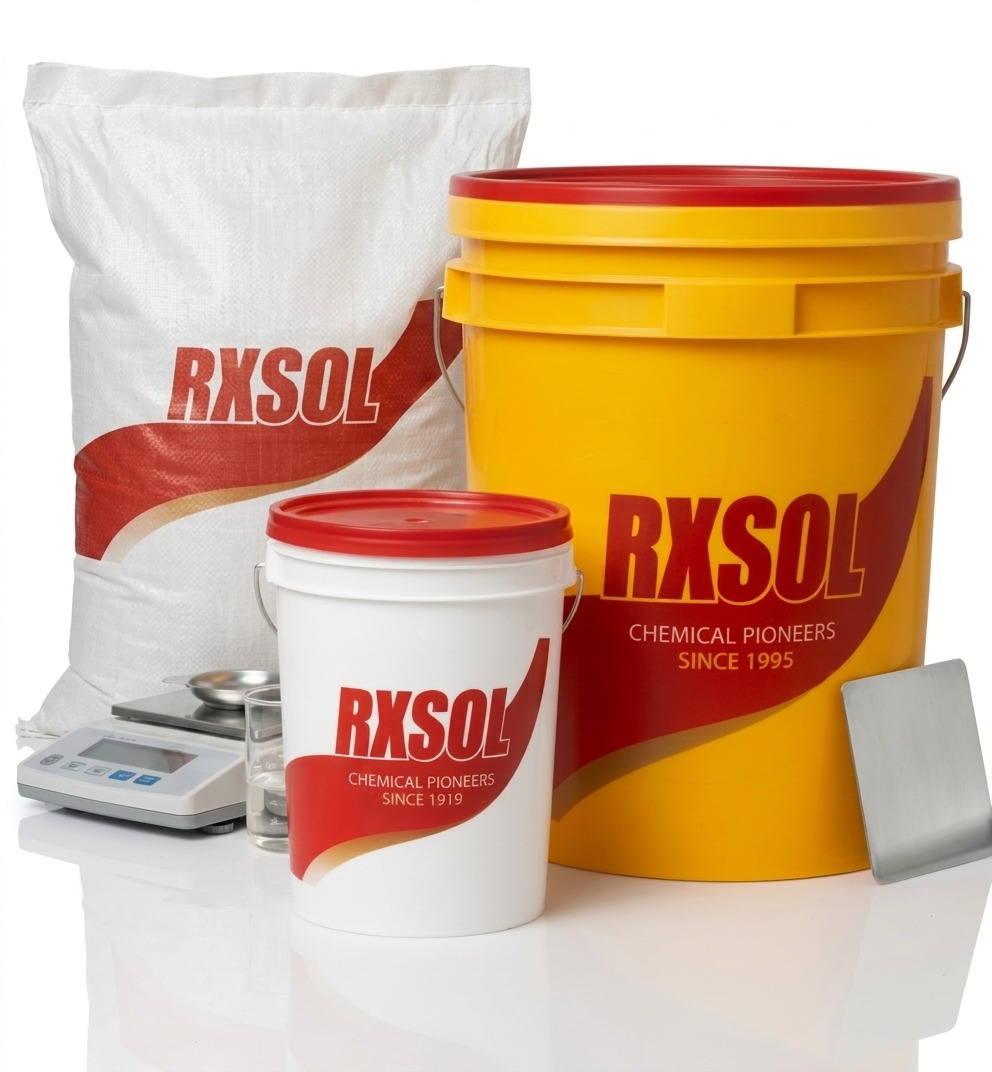
RXSOL-40-1534-025Is a co polymer of anionic character and high molecular weight
Product Description
PHPA is a co polymer of anionic character and high molecular weight It is a water soluble polymer which is primarily used as a highly efficient fluid loss reducer Viscosifier and protective colloid for shale s and cutting in fresh water calcium sodium brines and KCL mud systems.
PHPA specialized for oil & gas drilling and drilling-fluid applications.
Our PHPA (Partially Hydrolyzed Polyacrylamide) is used in drilling fluids for applications such as shale inhibition, borehole stability and fluid-loss control as drilling fluids / oilfield chemicals.
PARTIALLY HYDROLYSED POLYACRYLAMIDE (PHPA) manufactured by RXSOL manufacturing Plant in Mumbai, RXSOL PHPA is high molecular weight polymers one of the most Popular Drilling Polymers in the Oilfield Industry. Polymerised product of 2-Acrylamido 2-methylpropanesulfonic acid which is high molecular weight polymers (greater than two million) are desired.
PHPA LIQUID is a multifunctional high molecular weight PHPA copolymer in revert emulsion form. It can provide rapid viscosity development without the mixing problems. It is also used to encapsulate drill cuttings, lubricate wellbore and stabilize shale in low solids and non-dispersible drilling fluids systems.
Application & Usage
PHPA is a co-polymer of anionic character and high molecular weight. very strong ionic group and ionizes completely in aqueous solutions. In applications where the precipitation of mineral salts is undesirable, the incorporation of a polymer containing even a small quantity of AMPS can significantly inhibit the precipitation of divalent cations. It is a water-soluble polymer, which is primarily used as a highly efficient fluid loss reducer, Viscosifier and protective colloid for shale’s and cutting in fresh water, calcium, sodium brines and KCL mud systems. It is compatible with most of the drilling fluid products, biopolymers, PAC, CMC. It maintains borehole stability by preventing shale swelling and erosion.
Dosage
The normal application is 1.75 to 3.5 lb/bbl used in combination with KCl Potassium Chloride at 3 - 8% provides effective inhibition.
Useful Area
2-Acrylamido 2-methylpropanesulfonic acid USES and Application :::
Water Treatment Chemicals
a) Dispersants (Low molecular Weight): Co-Polymer and terpolymers of 2-Arcylamido 2-methylpropanesulfonic Acid are used in Cooling Tower and Boilers to inhibit Calcium, Magnesium and Silica scale.
b) Flocculants (High Molecular Weight): High Molecular Weight Co-polymer of 2-Arcylamido 2-methylpropanesulfonic Acid is used to percipitate solids in industrial and mining effluents.
Emulsions For Paints and Paper Coatings
Polymers containing 2-Arcylamido 2-methylpropanesulfonic Acid improve scrub resistance, dispersant performance and reduce grit formation.
Adhesives
a) Pressure Sensitive Adhesives : Ploymers containing 2-Arcylamido 2-methylpropanesulfonic Acid are used to improve tack and peel strength in Pressure Sensitive Adhesive fromulations.
b) Wood Glue : ploymers containing 2-Arcylamido 2-methylpropanesulfonic Acid improve adhesive strength, thermal and mechanical properties with superior rheology.
Hydrogels and Super absorbants
Polymers containing 2-Arcylamido 2-methylpropanesulfonic Acid are used in diapers, lotions and other personal care products, due to high water absorbing capacity, electrical conductivity, slipperiness and lubricity. Being super absorbants, ploymers also finds applications in the agriculture sector as water retention agents.
Textiler Auxillaries
Ploymers containing 2-Arcylamido 2-methylpropanesulfonic Acid are widely used as Textile Sizing Agents, Thickeners, Dispersants and Non-Woven Emulsion Binders.
Detergents and Cleaners
Polymers containing 2-Arcylamido 2-methylpropanesulfonic Acid improve charachteristic of hydrophilicity, dispersibility, and lubricity and also enhance the cleaning efficiency of Detergents and Cleaners
Oilfield and Mining Chemicals
Polymers containing 2-Arcylamido 2-methylpropanesulfonic Acid provide excellent high temperature stability, lubricity and friction reduction in drilling and cementing fluids.
Construction Chemicals / Super Plasticizers
Polymers containing 2-Arcylamido 2-methylpropanesulfonic Acid improve dispersability, lubricity and can be used as excellent flow control auxillaries for building materials.
Acrylic Fibre
Used as co-monomer in acrylic fiber industry to enhance dye receptibility.
Technical Specifications
|
PARAMETERS |
SPECIFICATIONS |
|
Appearance Non-Volatile Matter Colour APHA (25% Aq.solution) Iron Inhibitor (MMEHQ) |
Viscous Liq Clear Colourless To Loght Yellow Liquid 99.0 % Min. 100 Max. 10 ppm Max. 65-90 ppm |
| Charge | Anionic |
| Sp. Gravity | 1.05 to 1.1 |
Remarks / Precautions
Notes
PHPA LIQUID provides provides excellent cuttings encapsulation and improved wellbore stability. PHPA LIQUID is PHPA Polymer, a high-molecular-weight synthetic polymer designed as a shale inhibitor in water-based mud. PHPA LIQUID is not susceptible to bacterial attack. PHPA maintains viscosity in solid free drilling fluid. As a Bentonite extender in low solids non-dispersed mud, it can be used along with small addition of Bentonite to suspend weight material.
Material Safety Data Sheet (MSDS)

| Product Name | Partial Hydrolyzed Polyacrylamide PHPA |
| Part Number | RXSOL-40-1534-025 |
Company Details:
RX MARINE INTERNATIONAL
105, A wing , BSEL , TECH PARK.
VASHI ,NEW BOMBAY 400703 INDIA
Branch : Kandla, Mumbai , Chennai, Vizag, Kolkata, UAE , OMAN , CANADA and KENYA
| Phone | +91 22 20871200 - 1400 |
| Fax | +91 22 27612100 :::AOH :0091 9821214367 |
| mail@rxmarine.com | |
| Website | www.rxmraine.com |

Substances
| Synonyms | PAM |
| Formula | (C3H5NO)n |
| CAS-No. | 9003-05-8 |
No components need to be disclosed according to the applicable regulations.

| Classification of the substance or mixture | Not a hazardous substance or mixture according to Regulation (EC) No 1272/2008. |
| Label elements | Not a hazardous substance or mixture. |
| Other hazards | This substance/mixture contains no components considered to be either persistent, bioaccumulative and toxic (PBT), or very persistent and very bioaccumulative (vPvB) at levels of 0.1% or higher. |

| If inhaled | If breathed in, move person into fresh air. If not breathing, give artificial respiration. |
| In case of skin contact | Wash off with soap and plenty of water. |
| In case of eye contact | Flush eyes with water as a precaution. |
| If swallowed | Never give anything by mouth to an unconscious person. Rinse mouth with water. |
| Most important symptoms and effects, both acute and delayed | The most important known symptoms and effects are described in the labelling (see section 2.2) and/or in section 11 |
| Indication of any immediate medical attention and special treatment needed | No data available |

| Suitable extinguishing media | Use water spray, alcohol-resistant foam, dry chemical or carbon dioxide. |
| Special hazards arising from the substance or mixture |
Carbon oxides
Nitrogen oxides (NOx)
|
| Advice for firefighters | Wear self-contained breathing apparatus for firefighting if necessary. |
| Further information | No data available |

| Personal precautions, protective equipment and emergency procedures |
Avoid dust formation. Avoid breathing vapors, mist or gas.
For personal protection see section 8.
|
| Environmental precautions | No special environmental precautions required. |
| Methods and material for containment and cleaning up | Sweep up and shovel. Keep in suitable, closed containers for disposal. |
| Reference to other sections | For disposal see section 13. |

Precautions for safe handling
| Advice on protection against fire and explosion | Provide appropriate exhaust ventilation at places where dust is formed. |
| Hygiene measures |
General industrial hygiene practice.
For precautions see section 2.2.
|
| Conditions for safe storage, including any incompatibilities | |
| Storage conditions |
Store in cool place. Keep container tightly closed in a dry and well-ventilated place.
Hygroscopic.
|
| Storage class | Storage class (TRGS 510): 13: Non Combustible Solids |
| Specific end use(s) | Apart from the uses mentioned in section 1.2 no other specific uses are stipulated |

Personal protective equipment
| Eye/face protection | Use equipment for eye protection tested and approved under appropriate government standards such as NIOSH (US) or EN 166(EU). |
| Skin protection |
This recommendation applies only to the product stated in the safety data sheet,
supplied by us and for the designated use. When dissolving in or mixing with other
substances and under conditions deviating from those stated in EN 16523-1 please
contact the supplier of CE-approved gloves (e.g. KCL GmbH, D-36124 Eichenzell,
Internet: www.kcl.de).
Full contact
Material: butyl-rubber
Minimum layer thickness: 0,7 mm
Break through time: 480 min
Material tested:Butoject® (KCL 898)
This recommendation applies only to the product stated in the safety data sheet,
supplied by us and for the designated use. When dissolving in or mixing with other
substances and under conditions deviating from those stated in EN 16523-1 please
contact the supplier of CE-approved gloves (e.g. KCL GmbH, D-36124 Eichenzell,
Internet: www.kcl.de).
Splash contact
Material: Viton®
Minimum layer thickness: 0,7 mm
Break through time: 60 min
Material tested: Vitoject® (KCL 890 / Aldrich Z677698, Size M)
|
| Body Protection | Choose body protection in relation to its type, to the concentration and amount of dangerous substances, and to the specific work-place., The type of protective equipment must be selected according to the concentration and amount of the dangerous substance at the specific workplace. |
| Respiratory protection | Respiratory protection is not required. Where protection from nuisance levels of dusts are desired, use type N95 (US) or type P1 (EN 143) dust masks. Use respirators and components tested and approved under appropriate government standards such as NIOSH (US) or CEN (EU). |
| Control of environmental exposure | No special environmental precautions required. |

| Physical state | Solid |
| Color | No data available |
| Odor | No data available |
| Melting point/freezing point | Melting point/range: 246 - 250 °C |
| Initial boiling point and boiling range | No data available |
| Flammability (solid, gas) | May form combustible dust concentrations in air |
| Upper/lower flammability or explosive limits | No data available |
| Flash point | Not applicable |
| Autoignition temperature | No data available |
| Decomposition temperature | No data available |
| pH | No data available |
| Viscosity | No data available |
| Water solubility | No data available |
| Partition coefficient: n-octanol/water | No data available |
| Vapor pressure | No data available |
| Density | 0,750 g/cm3 |
| Relative density | No data available |
| Relative vapor density | No data available |
| Particle characteristics | No data available |
| Explosive properties | No data available |
| Oxidizing properties | No data available |
| Other safety information | No data available |

| Reactivity |
No data available
|
| Chemical stability | Stable under recommended storage conditions. |
| Possibility of hazardous reactions | No data available |
| Conditions to avoid | No data available |
| Incompatible materials | Strong oxidizing agents |
| Hazardous decomposition products | In the event of fire: see section 5 |

| Acute toxicity |
LD50 Oral - Rat - > 1.000 mg/kg
Inhalation: No data available
Dermal: No data available
|
| Skin corrosion/irritation | No data available |
| Serious eye damage/eye irritation | No data available |
| Respiratory or skin sensitization | No data available |
| Germ cell mutagenicity | No data available |
| Carcinogenicity | No data available |
| Reproductive toxicity | No data available |
| Specific target organ toxicity - single exposure | No data available |
| Specific target organ toxicity - repeated exposure | No data available |
| Aspiration hazard | No data available |
| Additional Information | To the best of our knowledge, the chemical, physical, and toxicological properties have not been thoroughly investigated. |

| Toxicity | No data available |
| Persistence and degradability | No data available |
| Bioaccumulative potential | No data available |
| Mobility in soil | No data available |
| Results of PBT and vPvB assessment | This substance/mixture contains no components considered to be either persistent, bioaccumulative and toxic (PBT), or very persistent and very bioaccumulative (vPvB) at levels of 0.1% or higher. |
| Endocrine disrupting properties | No data available |
| Other adverse effects | No data available |

| Waste Disposal Methods | |
| Product | Offer surplus and non-recyclable solutions to a licensed disposal company. |
| Contaminated packaging | Dispose of as unused product. |

| UN number | ADR/RID: IMDG: IATA: |
| UN proper shipping name |
ADR/RID: Not dangerous goods
IMDG: Not dangerous goods
IATA: Not dangerous goods
|
| Transport hazard class(es) | ADR/RID: IMDG: IATA: |
| Packaging group | ADR/RID: IMDG: IATA: |
| Environmental hazards | ADR/RID: yes IMDG Marine pollutant: yes IATA: no |
| Special precautions for user | |
| Further information | Not classified as dangerous in the meaning of transport regulations. |

| Safety, health and environmental regulations/legislation specific for the substance or mixture | This material safety data sheet complies with the requirements of Regulation (EC) No. 1907/2006. |
| Chemical Safety Assessment | For this product a chemical safety assessment was not carried out |

| Other Information |
The information above is believed to be accurate and represents the best information currently available to us. However, we make no warranty of merchantability or any other warranty, express or implied, with respect to such information, and weassume no liability resulting from its use. Users should make their own investigations to determine the suitability of the information for their particular purposes. In no event shall be liable for any claims, losses, or damages of any third party or for lost profits or any special, indirect, incidental, consequential or exemplary damages, howsoever arising, even if Rx Marine International has been advised of the possibility of such damages. DISCLAIMER OF LIABILITY :The information in this SDS was obtained from sources which we believe are reliable. However, the information is provided without any warranty, express or implied, regarding its correctness. The conditions or methods of handling, storage, use or disposal of the product are beyond our control and may be beyond our knowledge. For this and other reasons, we do not assume responsibility and expressly disclaim liability for loss, damage or expense arising out of or in any way connected with the handling, storage, use or disposal of the product. This MSDS was prepared and is to be used only for this product. If the product is used as a component in another product, this MSDS information may not be applicable. |
Supply Locations
2-Acrylamido 2-methylpropanesulfonic Acid ATBS manufacturer supplier distributor in Mumbai, Kandla, Kolkata, Vizag, Chennai, India, Fujairah, Dubai, Sharjah, UAE, Gulf, Middle East, Muscat Oman, Kenya Africa. Get the best quality of 2-Acrylamido 2-methylpropanesulfonic Acid ATBS at a competitive price from us. We have ready stock of 2-Acrylamido 2-methylpropanesulfonic Acid ATBS in India, UAE Gulf, Oman, Kenya Africa. Contact us for bulk as well as small orders.
Need pricing or a bulk quote?
Send us the product and quantity — our team replies with a quote same day.